Krajobrazy Braku
Bałtycka Galeria Sztuki Współczesnej
December 2025
The Landscapes of Lack exhibition presents the multi-layered Lack of Forest archive, developed by Martyna Miller since 2018. The research and artistic project was conceived in response to a tempest that struck the Tuchola Forest in August 2017, wrecking a vast expanse of it and profoundly affecting the lives of local communities. The project records the material traces of the environmental disaster as well as its social and emotional outcomes.
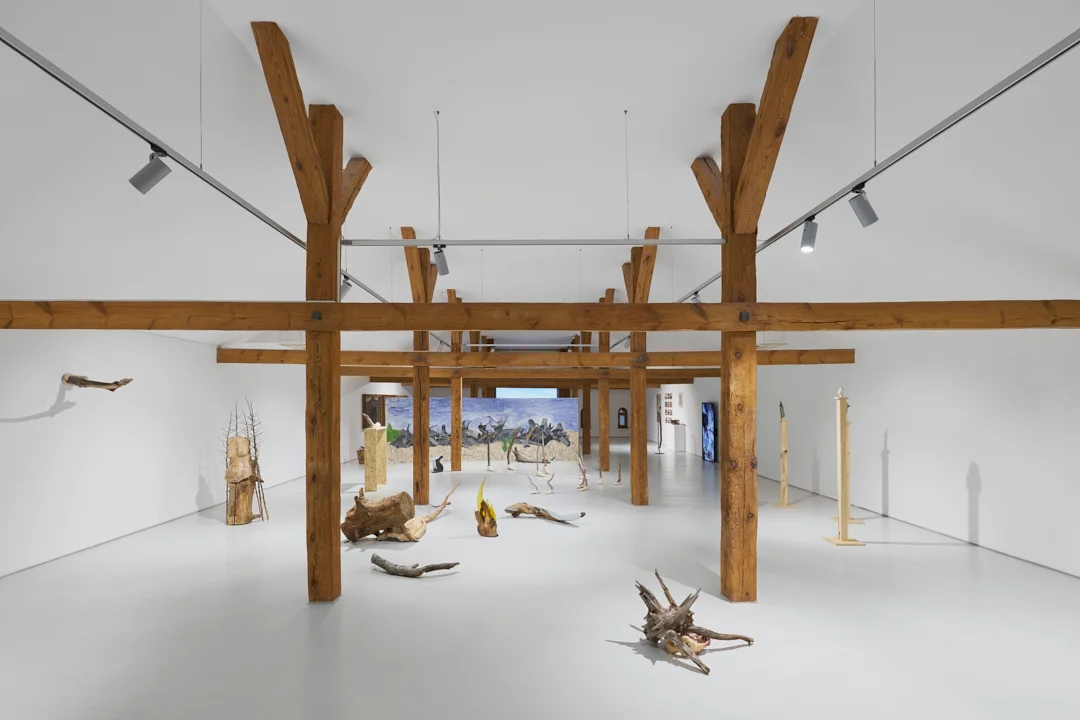
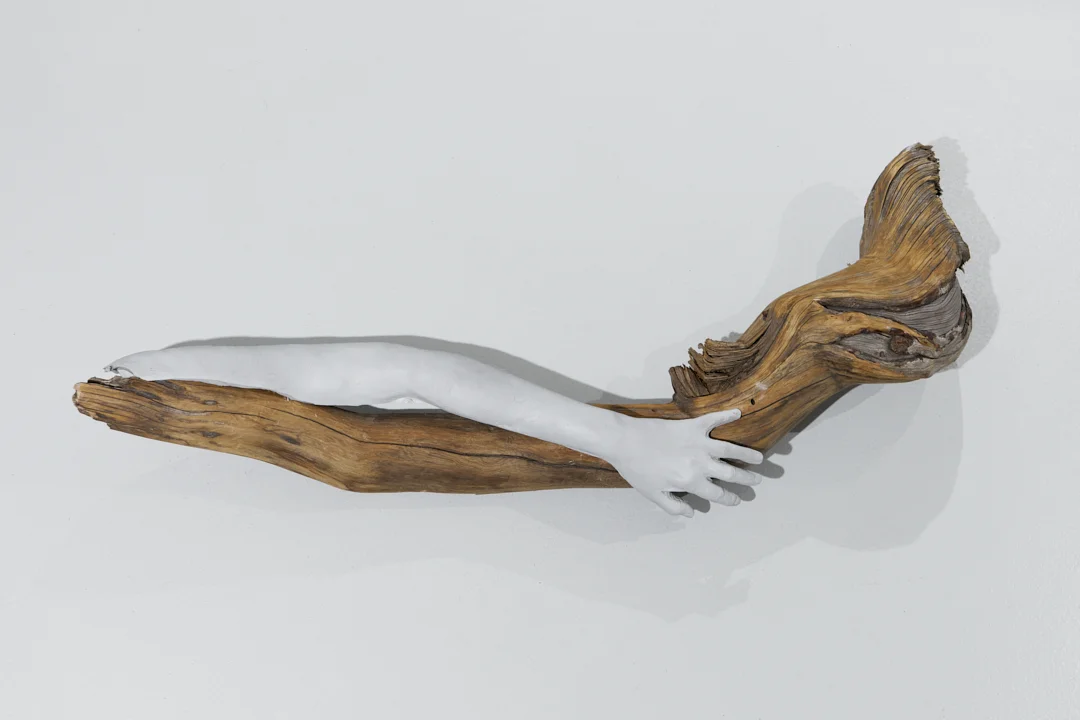
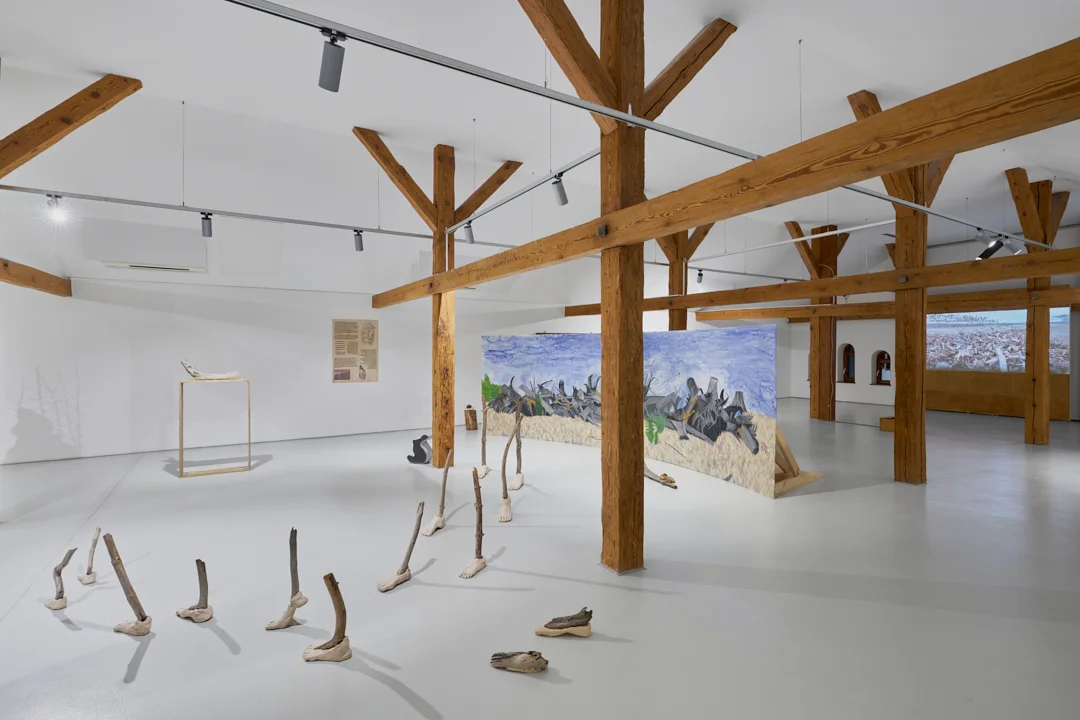
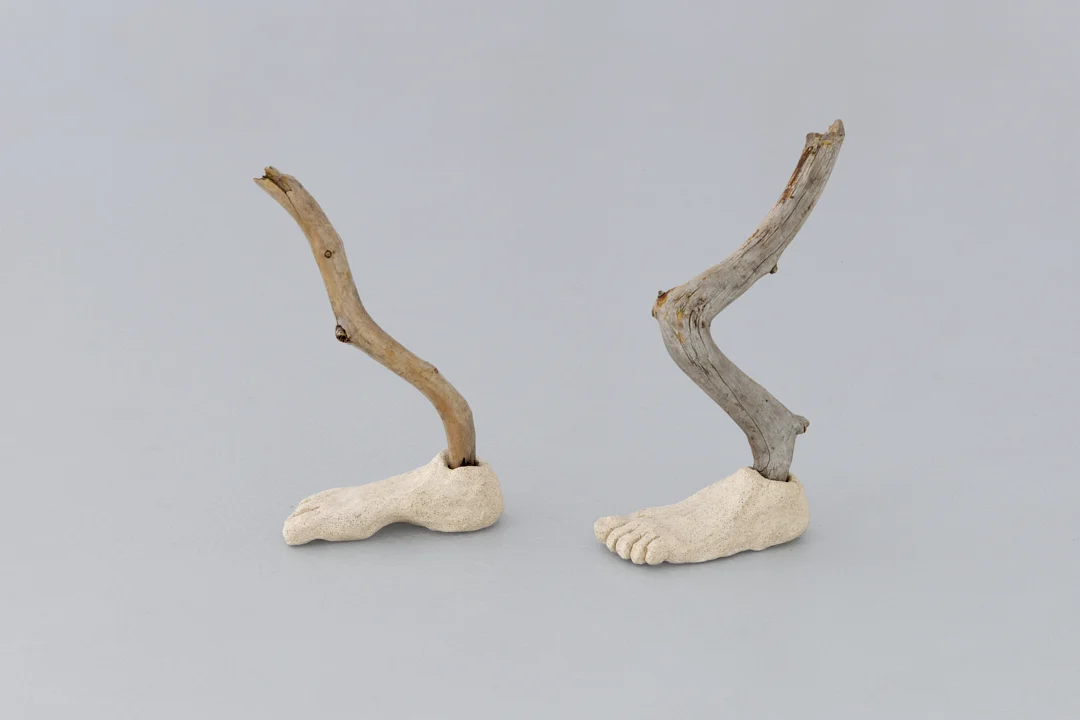
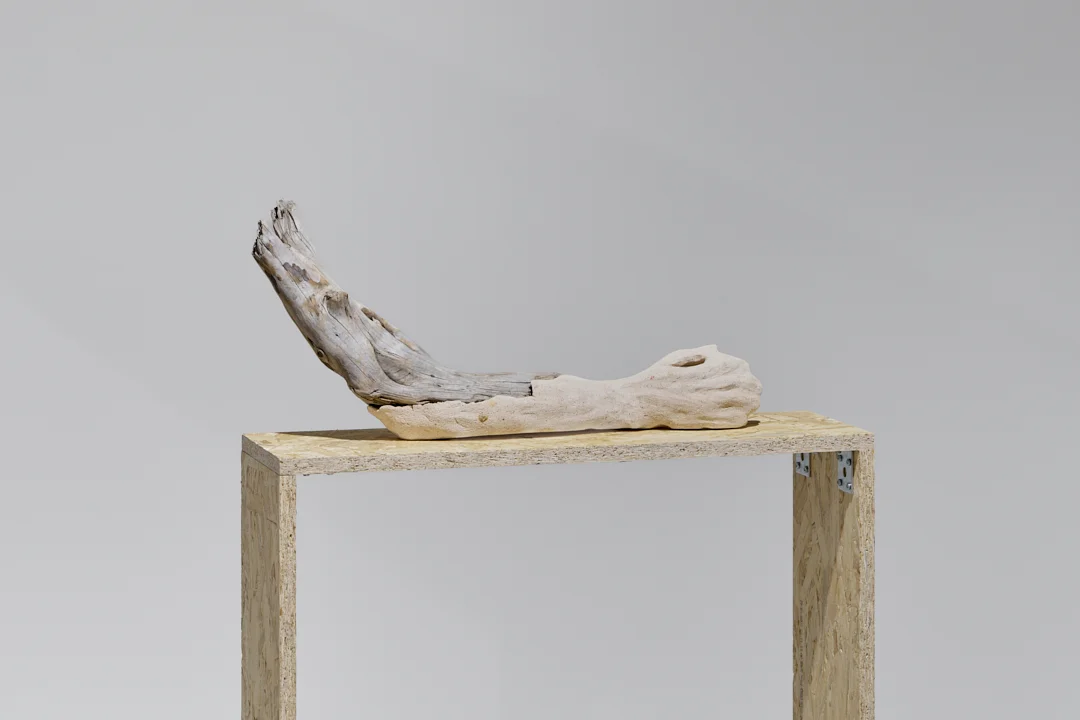
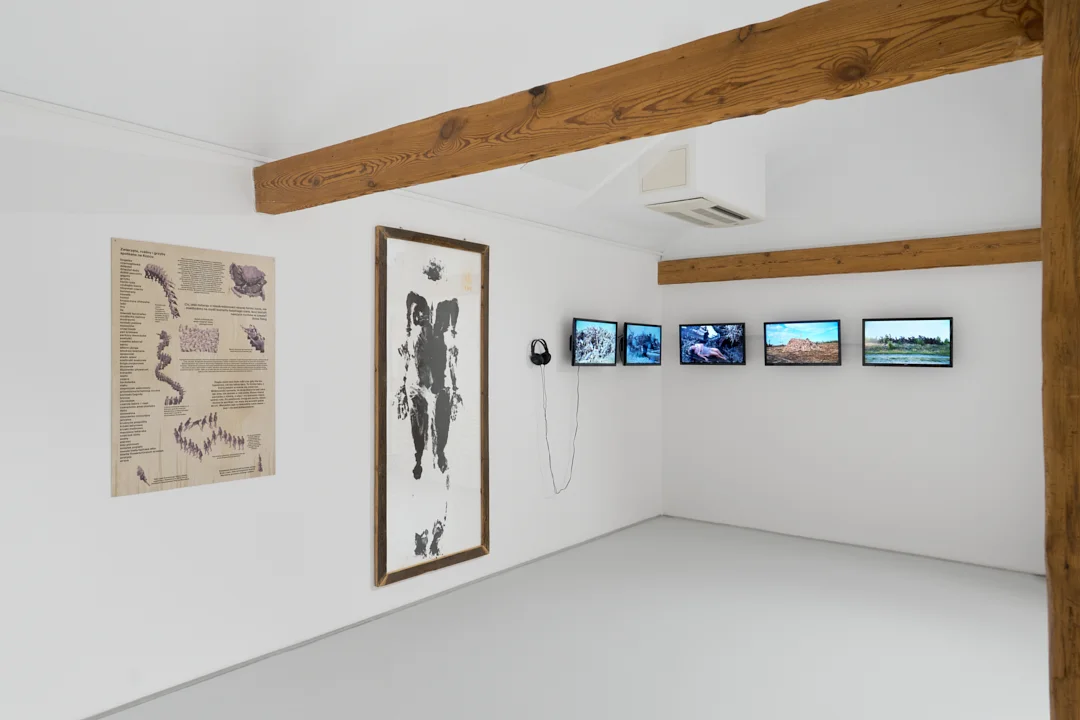
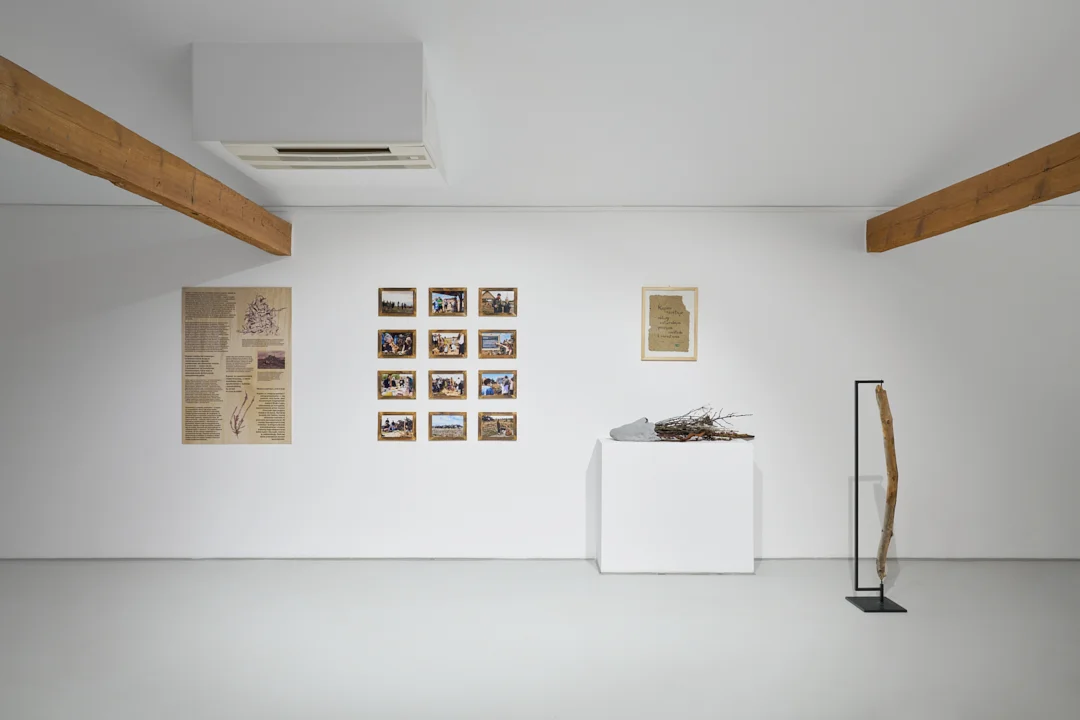
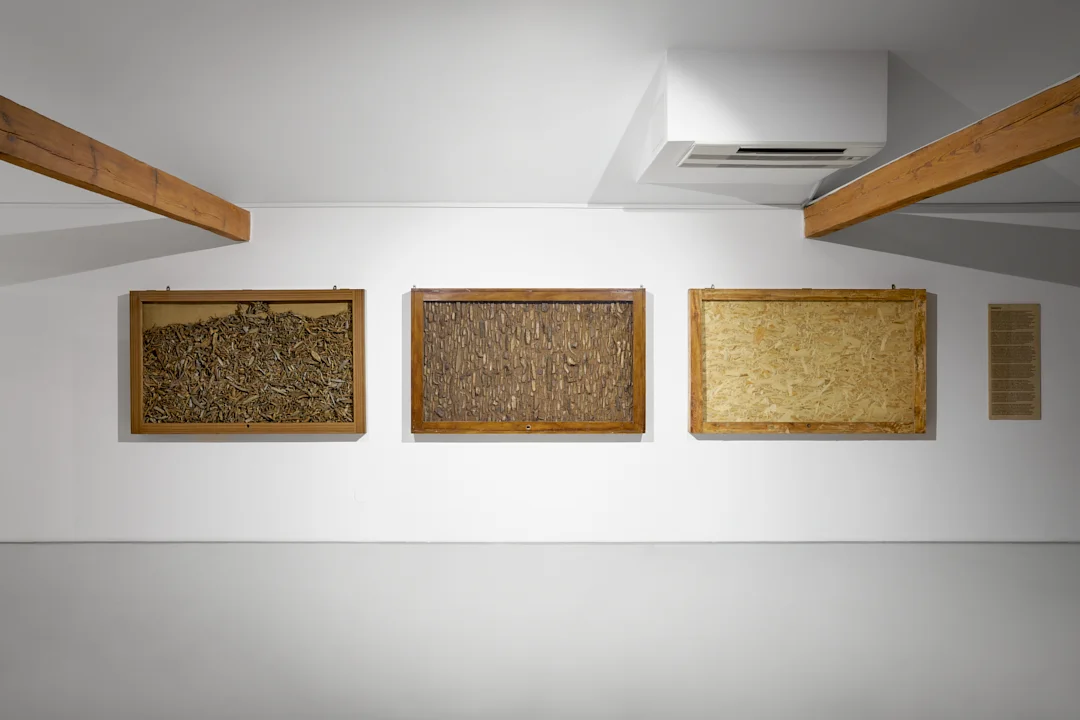
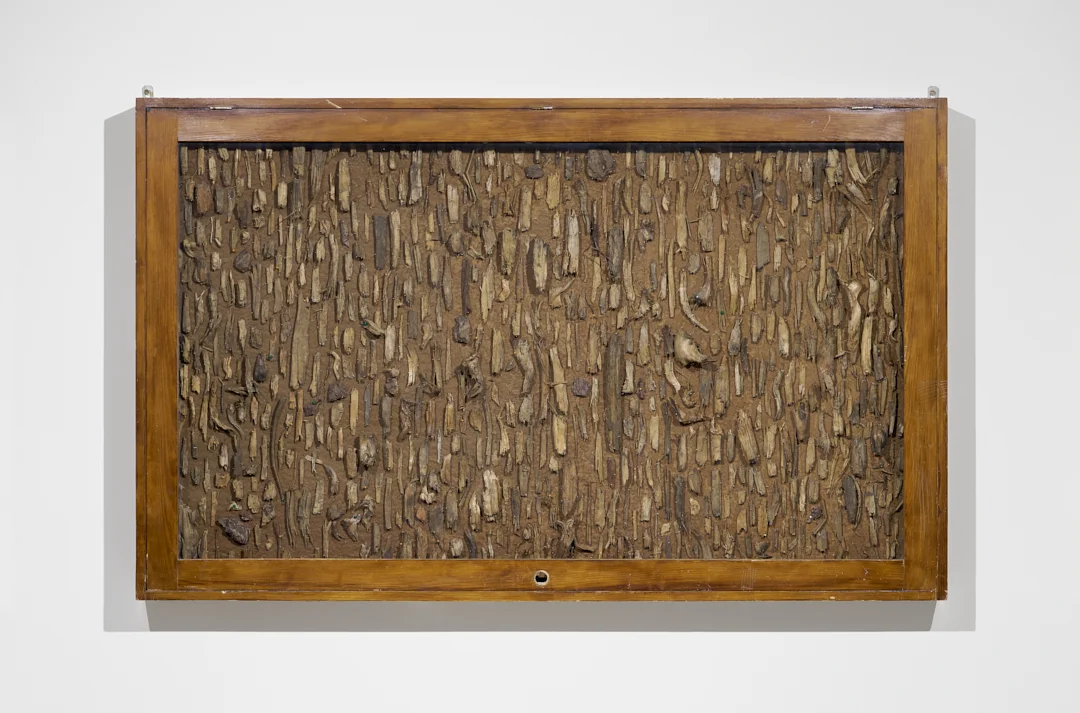
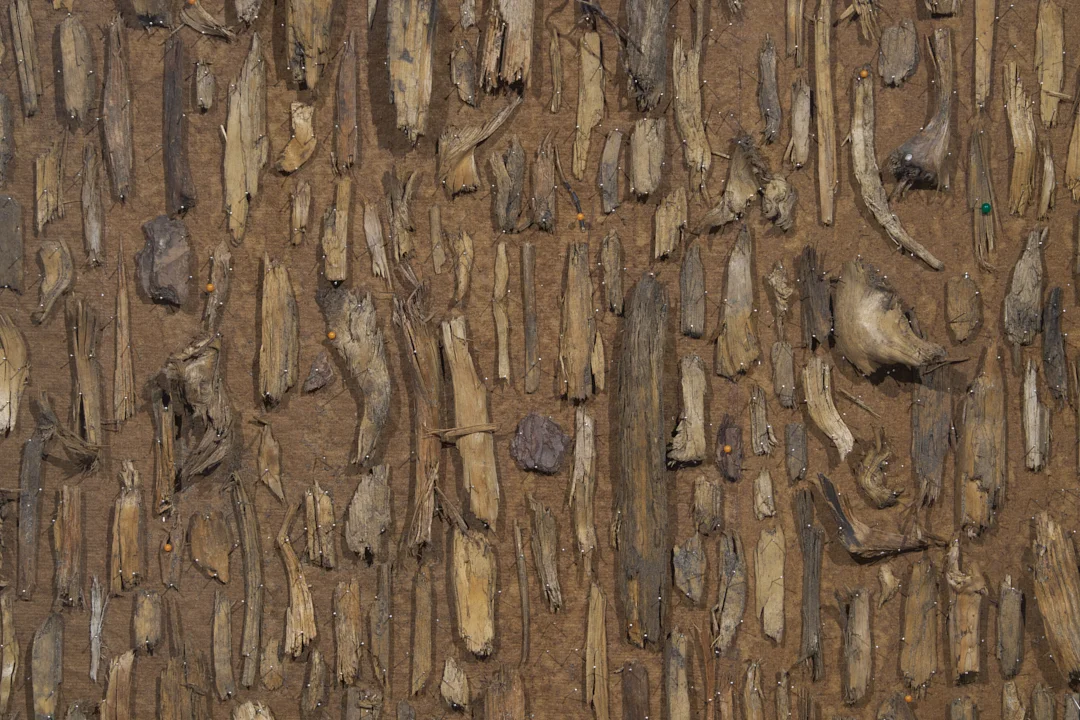
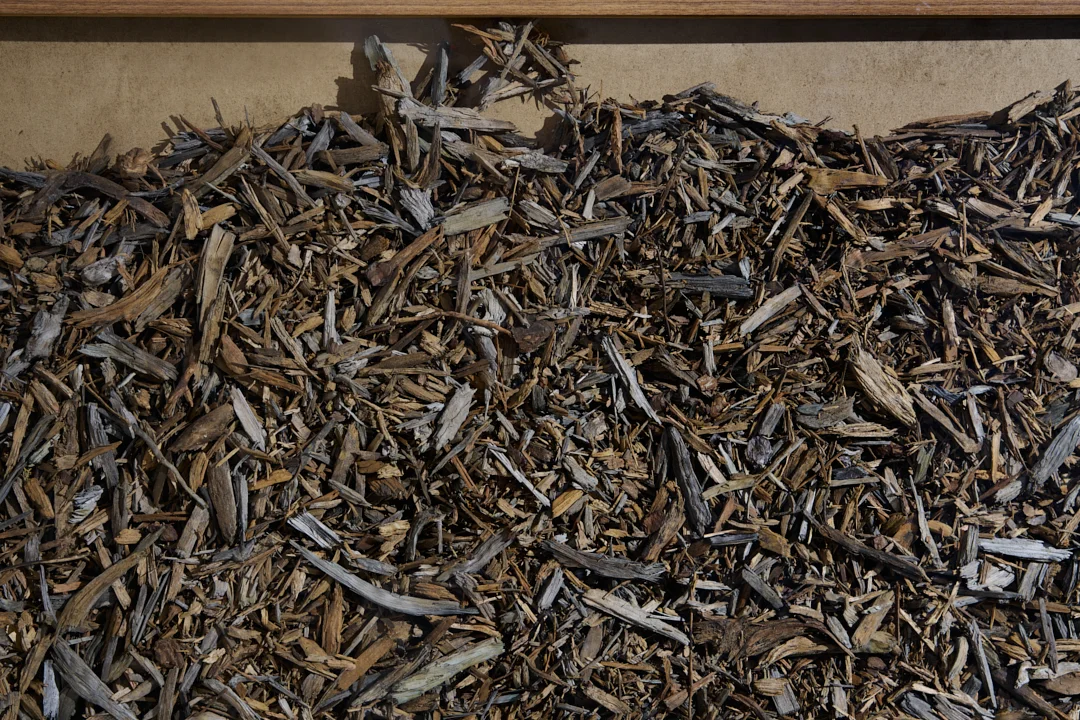
The exhibition comprises objects found in the area, pieces of wood and artefacts discovered among the debris, ceramic works, paintings, photographs, texts, film footage and documentation of performative and social activities. The archive is multidimensional, combining documentary approach, artistic practices and speculative thinking about the future. The assembled traces provide an impulse for creating new narratives about landscape, memory and regeneration.
The centrepiece of the show is a large-scale panorama of the Lack of Forest Mound. Made of tree fragments, exposed roots and fallen trunks, this sculpture-memorial is located near the village of Suszek, where the very epicentre of the tempest was. The Mound serves as an eco-memorial: it commemorates the disaster and, simultaneously, creates a space for dialogue, observation and a tender non-hierarchical relationship with the regenerating ecosystem. Since 2022, the area surrounding the Mound has been a “biocoenotic hotspot.” It is now a site of research into the processes that take place at the intersection of decay and rebirth. The exhibition complements this space with photographs, video materials and documentation of meetings initiated by the artist.
Miller consciously draws on the tradition of mounds as historical monuments: from ancient graves and nineteenth-century commemorative structures to the Warsaw Uprising Mound, raised from the rubble that the city had been reduced to. She uses the same logic in dealing with the matter of ecological catastrophe. She treats the “rubble of the forest” – unearthed roots and dead trunks – as its remains, its body. The disappearance of the forest has caused a void in the landscape, but also the disintegration of local mythologies, value systems and everyday routines. The artist’s gesture poses the question about new models of commemoration. How to create a monument to landscape? How to remember a forest that has been razed to the ground? Is it possible to mourn for a landscape?
Talking to locals, the artist has noted the difficult they have in speaking about the experience. The disaster is “beyond imagination,” and so it has remained untold for a long time. In this light, the Mound becomes a place that helps to cope with the loss. It provides space in which to confront emotions as yet unexpressed.
What is inexpressible gets recorded in the body: in tensions, in muscle memory, in gestures, in the ways of moving through a place that no longer exists. For Miller, this as a deep embodiment of experience. It is for this reason that body – human and non-human – becomes the main vehicle for the story in the Lack of Forest project. The artist discovers forms of expression in movement, touch and physical contact with the remains of the forest.
Her objects, particularly the ceramic ones, are casts of body parts combined with wood, branches and trunks. Forest-human hybrids emerge: prosthetics, totems and protective structures. Hands, feet and torsos embrace dead wood, supporting and stroking it. As though they were trying to give meaning to something that defies expression.
A publication called Brak Lasu (The Lack of Forest) is being prepared concurrently with the exhibition (to be published by Pamoja Press, edited by Joanna Bednarek, designed by Zofia Kofta). The book takes the form of an atlas containing essays, fieldwork, photographs, visual notes and conversations. Excerpts from the publication have been incorporated into the exhibition as infographic panels. The book launch will take place at the closing reception.
The Lack of Forest multimedia archive serves not only as a form of commemoration and passing on history, but also as a way of imagining a different future. All these elements create an alternative mythology of place and community – a story of resilience and the possibility of transformation, of absence giving rise to a new form of life and community.
Tomek Pawłowski-Jarmołajew
